 Bino Birds
Cozy birding game
Real Australian birds in a storybook bush. Spot one, get a good look, name it, keep it. Then go and find it outside.
Sittella Studio · Game funder versionScience and community versionConservation partner version · checked 26/11/2026
The idea
Screen to real birds.
Every bird in Bino Birds is a real Australian species. The game is built to end with a player outside, binoculars up, naming the bird on their own street.
The opportunity
Calm games already teach noticing
What players do
Explore, collect, come back to see what changed. Calm collecting games reward patience over reflexes.
What birding asks
The same patience, pointed at the real world. Notice movement, get a clean look, name the bird.
What we don't know yet
Who plays, and why. We have no player numbers or audience research. The pilot exists to find out.
Why it works
Birding is learnt by doing, with people
Start on screen
Players meet real local birds first in a game they already like.
Finish outside
Bird walks with local groups turn a lifelist into a morning out with people who know the birds.
What we don't know yet
Whether game players turn up to a walk. The pilot tests it.
Bird walks are a goal, not built. No group is named or committed.
Why it works
Habitat is the lesson underneath
Birds where they live
Each hide is a real habitat: dry woodland, wetland, rainforest gully.
Learn where to look
Finding a bird means knowing its place. That is the first habitat lesson.
What we don't know yet
Whether that understanding carries outside. The pilot asks players.
Where it goes
From the screen to the street
Vision, not built
Real sightings count
Saw a real Superb Fairywren? Log it, and it joins your in-game lifelist.
Bird walks
Events run with local bird groups, so players go looking with people who know the birds.
Local bird of the week
One bird a week, drawn from our 620-species database.
None of these three is built yet. No partner is named or committed.
The game
One loop: spot, look, name, keep
- 1ExploreWalk the reserve and its hides.
- 2DetectNotice movement in a gum.
- 3ObserveCreep close for a clean look.
- 4IdentifyBinoculars up, hold steady.
- 5LogInto your field notebook, saved.
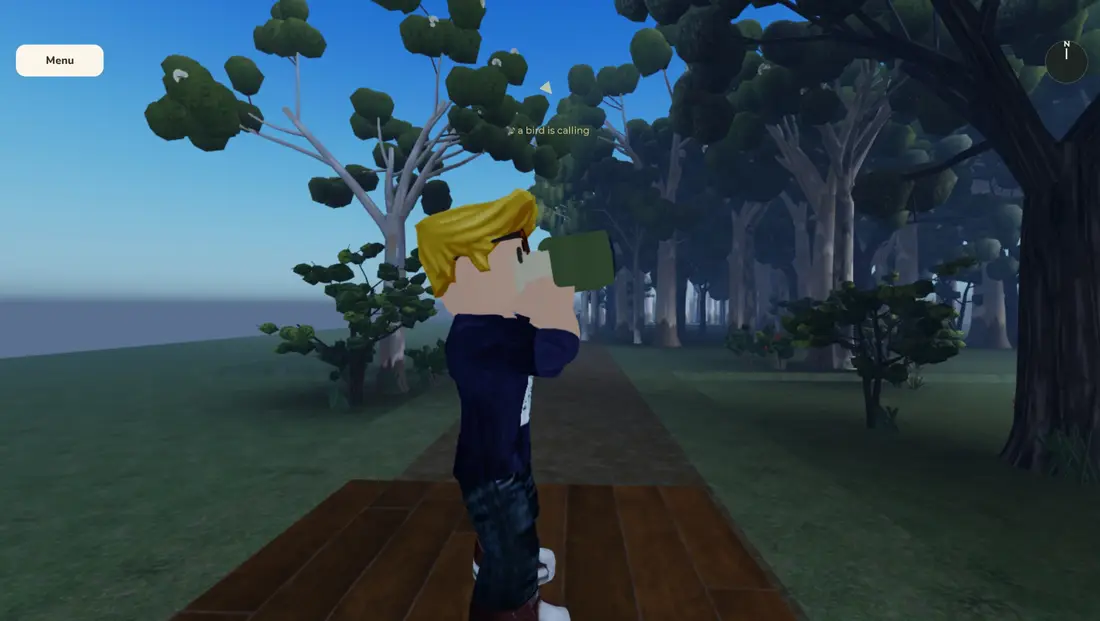
Built today
Playable today, in Roblox Studio
Built
- Core loop with server-checked identification and a saved lifelist
- 29 Australian birds at launch, each with its own behaviour
- All 29 are rigged, animated 3D models with their own movement clips
- Rarity: uncommon birds about every 15 minutes, rare ones about every 25
- Three hides: dry woodland, wetland, rainforest gully
- Ranger Station hut that fills with trophies, plus an 8-level ranger ladder
- Player map, time of day, seasons and weather
Not yet: bird calls (slots coded, audio pending licensing) and public release.
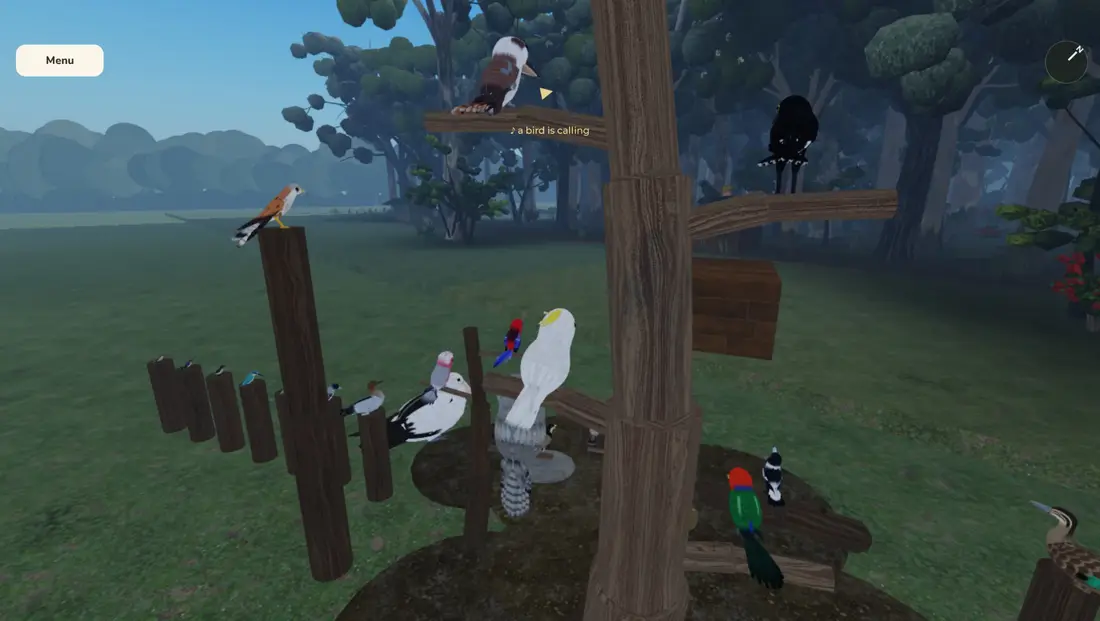
Movement
Birds that move like their family
All 620 species in our database carry one of 15 movement types, so a new bird moves like its family. These are real clips from the game's own rigged birds.
See all 29 birds and their signature moves on the main site.
Built on real bird data
- Bird facts in the game are drawn from published sources such as BirdLife Australia and the Australian Museum, with sources recorded in our bird database. Game facts are being checked against them before public launch.
- The first plant layer is 16 local Hunter Valley plants, hand-curated and linked to the birds that use them. It is built but switched off while sources are added.
- Review by an ecology adviser is planned before public launch.
Before and after
Measuring what players learn
Planned for the pilot
Playtesters name a set of local birds from pictures before they play, then again after. Same birds, same format, results written up whatever they show.
Planned for the pilot. Not run yet, no results.
Where it goes
From the screen to the street
Vision, not built
Real sightings count
Saw a real Superb Fairywren? Log it, and it joins your in-game lifelist.
Bird walks
Events run with local bird groups, so players go looking with people who know the birds.
Local bird of the week
One bird a week, drawn from our 620-species database.
None of these three is built yet. No partner is named or committed.
Where it goes
Real sightings, logged by players
Vision, not built
Players will be able to log a real bird and see it join their lifelist. Whether that data helps anyone beyond the player is untested.
Before it's shared
Data quality checks, and privacy for young players, come first.
Learning goals
Three things a player walks away with
1 · Know local birds by sight
Every bird keeps the field marks a real birder looks for, so the look learnt in game works outside.
2 · Birds need habitat
Hides follow real habitats: dry woodland, wetland, rainforest gully. New habitats arrive in stages.
3 · Go birdwatching for real
The bridge features exist to get players outside with binoculars.
The pilot measures these with playtesters, before and after. No results exist yet.
Honest measures
What the pilot will and won't show
We will measure
Bird ID before and after play. Real sightings logged. Answers to simple habitat questions.
We won't claim
Conservation outcomes the pilot can't show.
Who it's for
Three kinds of player
Kids 8 to 12 on Roblox
Already playing calm explore-and-collect games, where Bino Birds lives.
Families playing together
A slow game a parent and child can share, then take outside.
Adult nature lovers
Curious about the birds in their own backyard, happier noticing than reading.
No audience research or player numbers yet. The pilot tests who plays and why.
Who it's for
Community-led, never school-only
Families playing together
A slow game a parent and child share, then take outside.
Kids 8 to 12 on Roblox
Reached where they already play, with a way out the door.
Adult nature lovers
The people most likely to bring someone along to a walk.
Open to anyone, run with community groups. Not a classroom product.
Since 12/10/2026 a public Roblox release reaches age-checked 16+ players by default. For the pilot, Bino Birds uses Roblox's early-tester invites (up to 10, free) so under-16 testers can play with parent consent. A public release for 8 to 12s goes through Roblox's all-ages verification (ID check, two-step verification, a 1,000 Robux fee or 2 months of Roblox Plus, then Roblox's own evaluation) before public launch.
The vision
Built in stages, one habitat at a time
The vision
One habitat at a time, plants included
Backyard and bush first, then shore and wetland, then rainforest. A flora layer linking 16 local plants to the birds that use them is built and switched off.
Backyard and bush
29 birds in the Studio build now.
Shore and wetland
172 species already tagged. Waders and swimmers, a new hide.
Rainforest
18 species already tagged.
Feature birds
Signature displays: lyrebird, bowerbird, brolga.
A standalone edition, for funders that need one
Some funders exclude Roblox-only games. An early standalone edition in Godot is started: code for exploring, identifying and a saved lifelist, with six stand-in birds. It has not been run or play-tested yet.
From playtest to bird walk
The pilot ends with one walk: playtesters and their families out with a local bird group, looking for birds they met in the game.
No date, group or venue set.
The ask
A small pilot: $5k to $30k
Final figure to be confirmed once each line is costed.
Evidence build
Close the open fixes and freeze a dated build anyone can try.
Playtests
A private tester round, written up: what players did and what they learnt.
Playtests with before and after ID
A private tester round, measured and written up: what players did and which birds they could name afterwards.
One habitat
Fill out backyard and bush, ready for a public Roblox release.
One habitat, with its plants
Fill out backyard and bush, plants included once their facts are source-checked, ready for a public Roblox release.
Under-16 testing, free
The pilot uses Roblox's early-tester invites (up to 10, free, with parent consent). All-ages verification comes later, at public launch.
Still to cost: Jess's time, art, audio, expert advice and testing.
The studio
Sittella Studio
The product arm of DotJess, an Autistic-led social enterprise run by Jess Jones on Wonnarua Country, NSW. Jess builds the tools she wants to use, and birds are one of her long threads.
Already in hand: a 620-species bird database, a repeatable art pipeline and a playable build.
Jess directs and reviews every part of Bino Birds. AI tools help with concept images, building and rigging the 3D birds, and writing game code. Bird facts come from published sources, not AI. A full AI-use statement is available for any funder.